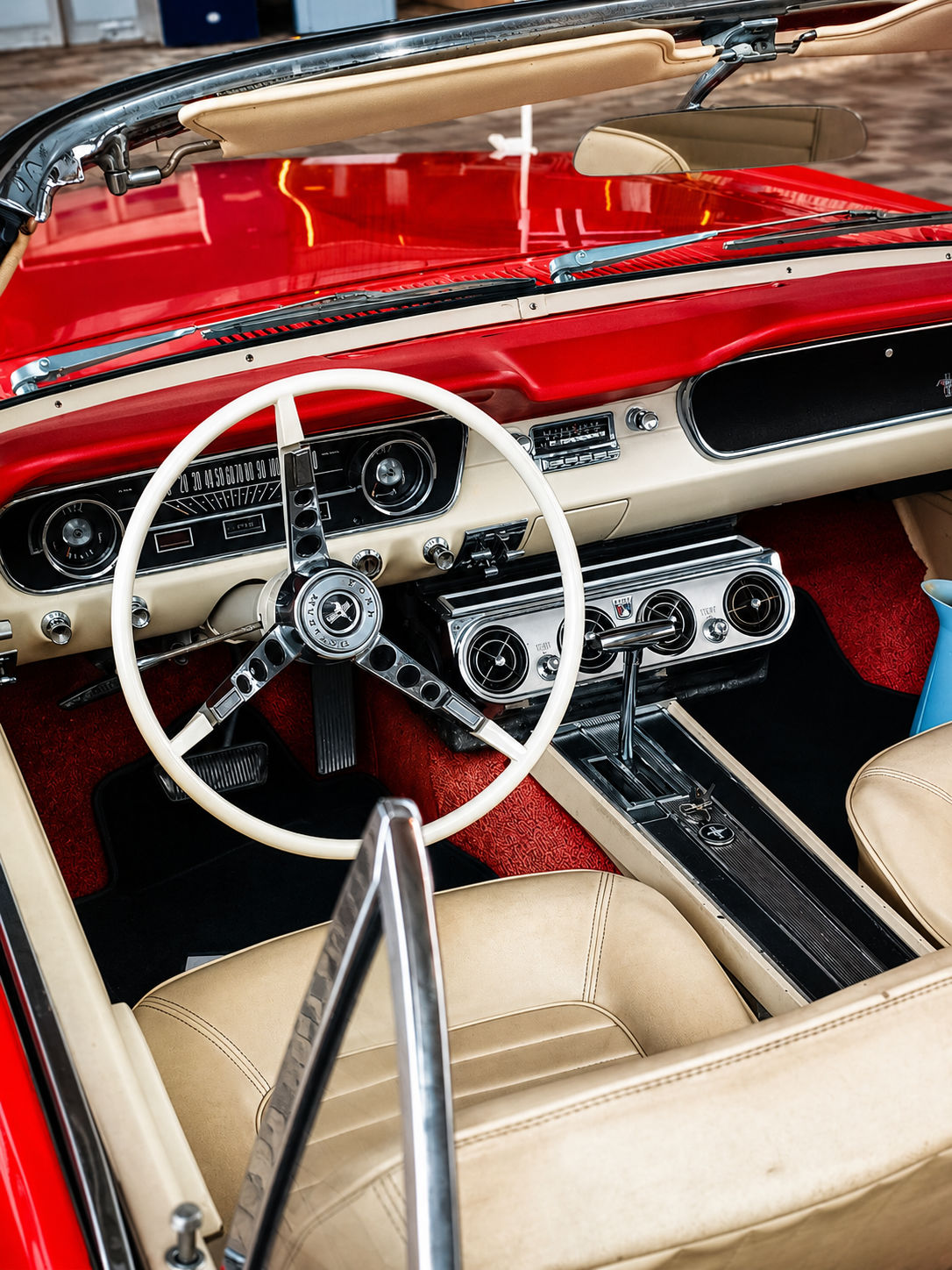
If you’ve spent any time scrolling US classifieds, you’ll know the feeling: a clean, low-mileage Mustang for a fraction of what the same year and trim would cost you here on the Costa Blanca. It’s tempting — and it’s absolutely doable. But importing a car from the US isn’t quite as simple as buying it and driving it off a boat. There’s a real process, a handful of taxes with unfamiliar names, and a few steps where people commonly get stuck.
We’ve pulled this together as a plain-English (well, plain-Spanish-too) walkthrough of what actually happens between “found the car” and “driving it around Dénia with the roof down.” It’s not a substitute for professional advice on your specific car, but it should give you a realistic picture of the road ahead.
Why people do it anyway
Despite the paperwork, importing still makes sense for a lot of buyers. The US market is enormous, which means far more choice — trims, colours, and generations that were never sold new in Europe. Prices for equivalent condition and mileage are often noticeably lower too, even once you’ve added shipping and duties on top. For a lot of our members, it’s less about saving money and more about getting the exact car they actually want, rather than settling for whatever happens to be for sale locally.
The process, step by step
1. Buy the car and get your export paperwork in the US Before it even leaves American soil, the car needs an export declaration from US customs. Costs here vary depending on the car and how it’s being shipped, so it’s worth getting a quote from a shipping agent early — this is also the point where you’ll want to check the car’s title is clean and there’s nothing that will cause problems later.
2. Shipping Cars typically arrive either in a shared container or, for something you want handled more carefully, its own container. Budget time as well as money here — sea freight from the US to a Spanish port isn’t fast, and delays happen.
3. Customs clearance in Spain Once the car lands, it goes through Spanish customs. If it’s coming from outside the EU (which the US is), you’ll pay import duty of around 10% of the vehicle’s value, insurance, and shipping combined, plus 21% IVA on top of that total. This is usually the biggest chunk of the whole import cost, so it’s worth having it front and centre when you’re budgeting — not a surprise at the end.
4. Get it recognised as a historic vehicle (if it qualifies) This is the step a lot of importers don’t realise exists until they hit it. To register an older Mustang in Spain, you’ll typically need a report from an accredited lab confirming the car can be classified as historic, and you may also need to show membership in a recognised historic vehicle club to demonstrate genuine collector interest in the model. Spain updated its historic vehicle rules in 2026, so if your car is borderline on age or condition, it’s worth checking the current criteria before you commit to buying — we’ve written a separate post on exactly what changed.
5. Homologation (if there’s no European type approval) American cars don’t come with a European Certificate of Conformity, so most will need what’s called an “homologación individual” — an individual approval process where an accredited engineer checks the car against European technical requirements. Common checks include braking performance and emissions. This step needs to happen before the car can pass its ITV.
6. Pass the ITV as an imported vehicle With homologation done, the car goes through ITV as an import. You’ll need your customs paperwork, tax receipts, driving licence, and the car’s documentation on hand. Assuming everything checks out, you’ll come away with a new Spanish technical file (ficha técnica) for the car.
7. Pay the registration tax (IEDMT) Also known as the “impuesto de matriculación,” this is calculated based on the car’s official CO2 emissions and its assessed value in Spain — not necessarily what you paid for it. Rates range from 0% to 16% depending on emissions and which autonomous community you’re registering in. We’ve broken this one down in detail in its own post, because it trips up almost everyone.
8. Register with the DGT and pay local road tax The final steps are registering the car with the Dirección General de Tráfico and paying your municipal circulation tax, which varies by town — some municipalities exempt classic cars entirely, so it’s worth asking your ayuntamiento directly.
Roughly, what does it all cost?
Every car is different, but as a rough shape of the costs involved beyond the price of the car itself:
- Import duty: around 10% of vehicle value + insurance + shipping
- IVA: 21% on top of that
- Historic vehicle lab report: roughly €200
- Historic vehicle club membership/certification: roughly €80
- Industria fees: around €40
- ITV: around €120 (varies by region)
- Registration tax (IEDMT): 0–16% of assessed value, depending on emissions
- DGT registration fee: around €98
- Municipal circulation tax: varies by town
Add it up and it’s a meaningful number — but for many buyers, even with all of this on top, the total still lands below what an equivalent car would cost bought locally, particularly for less common trims and colours.
Where people usually get caught out
The single most expensive mistake is buying a car in the US before checking whether it’s realistically homologable in Spain. Some modifications, engine configurations, or safety setups can make the process far longer and more expensive than expected — sometimes prohibitively so. Get an opinion from someone who’s done this before you wire any money.
The second most common issue is underestimating timelines. Between shipping, customs, homologation, and ITV scheduling, it’s not unusual for the whole process to take several months from purchase to plates. If you’re planning to have the car for a specific event — our own International American Cars Meeting, say — build in a lot of buffer.
This post is general guidance based on current rules as we understand them, not professional customs or tax advice. Rules around emissions bands, regional tax rates, and historic vehicle criteria do change, so always confirm the specifics for your car with a gestoría or licensed import agent before you commit.