Table of Contents
The Aitana Backbone Run
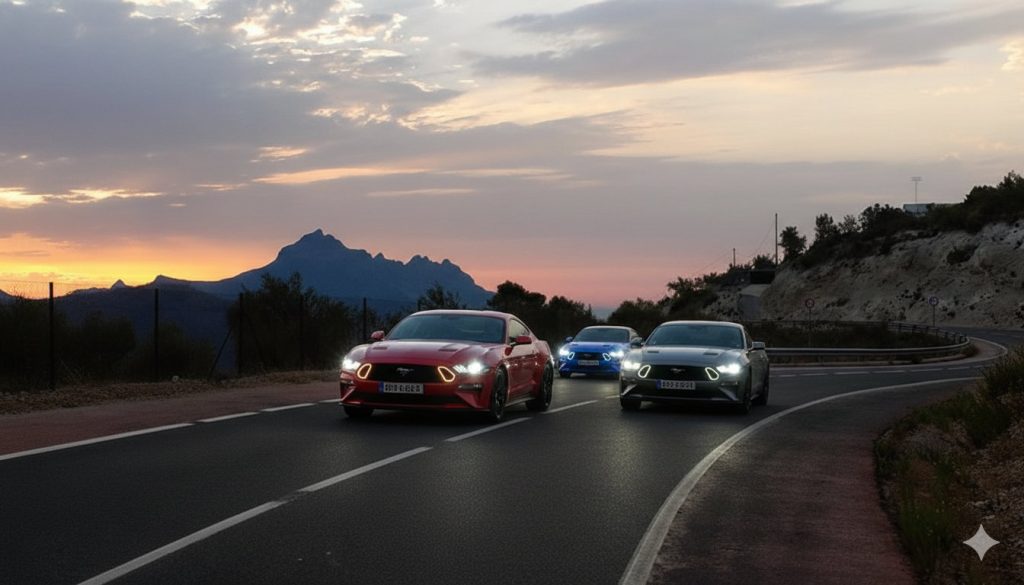
This route is a driver’s dream, taking you from the Mediterranean coast into the high-altitude heart of the Sierra de Aitana before descending back to the sea. the second half allows you to “stay on the CV-70” for an epic run through the Guadalest Valley.
Route: Alicante → Orxeta → Sella → Alcoleja → Benasu → Guadalest → Alfaz de Pi
Driving Time: 2.5 – 3 hours (active driving)
Alicante Port to Orxeta & Sella
Directions: Exit Alicante Port and take the N-332 (or the AP-7 for a faster start) North toward Villajoyosa. Take the exit for Villajoyosa/Orxeta and join the CV-770.
The Drive: You’ll transition quickly from sea level into the foothills.
Pit Stop (Orxeta): Restaurante El Pantano. Located just outside the village, it offers fantastic views of the Amadorio Reservoir and the surrounding mountains. Perfect for a morning coffee or a hearty burger.
Pit Stop (Sella): Bar María in the village square. It’s a classic local spot to grab a drink and soak in the rustic atmosphere of one of the steepest villages in the province.
Sella to Alcoleja (The Puerto de Tudons)
Directions: Stay on the CV-770. This is the most dramatic section of the climb as you master the Puerto de Tudons (1,020m altitude).
The View: As you reach the peak of the pass, the views back toward the coast are legendary. You are driving along the “backbone” of the highest mountain in the province, the Aitana.
Pit Stop (Alcoleja): Bar Aitana.A family-run gem specializing in Mediterranean dishes and seafood tapas. It feels very authentic and “off the beaten path.”
Alcoleja to Benasau (Joining the CV-70)
Directions: From Alcoleja, take the CV-785 for a short, scenic 10-minute connector drive to Benasau.
The Transition: At Benasau, you will officially turn onto the CV-70 heading toward Benidorm/Guadalest. From here on out, you are on the “Big Road.”
Pit Stop (Benasau): Restaurante Serrella. Known for its minchos (traditional savory pies) and mountain stews. It’s a great spot for a mid-day tapa.
Benasau to Guadalest (The CV-70 Masterclass)
Directions: Stay on the CV-70 heading East.
The Drive: This is widely considered one of the best driving roads in Spain. It features wide, well-paved sweeping curves, high-speed sections, and dramatic elevation changes. You will pass through Confrides and Benimantell.
Pit Stop (Benimantell): Venta La Montaña. Located right on the CV-70 just before Guadalest. It is legendary among motoring clubs for its mountain views and traditional “Olleta de Blat” stew.
Must-See View (Guadalest): Pull into the main parking of El Castell de Guadalest. Walk to the Plaza de San Gregorio for the iconic view of the turquoise reservoir (Embalse de Guadalest) framed by the limestone peaks.
Guadalest to Alfaz del Pi
Directions: Continue East on the CV-70. You will pass through La Nucía and Polop.
The Descent: As you descend toward the coast, the Mediterranean opens up in front of you. On a clear day, you can see the Peñon de Ifach in Calpe.
Final Destination: Follow signs for Alfaz del Pi/L’Albir.
Celebratory Drink: Bodega Enrique Mendoza (Alfaz del Pi). It’s one of the most famous wineries in the region. Alternatively, head to the seafront in Albir for a sunset drink with views of the lighthouse.
Pro-Tips for the Pack
Fuel: Fill up in Alicante or Villajoyosa. There are very few petrol stations once you begin the climb from Sella until you reach La Nucía.
The “Hero Shot”: The best place for a group photo is the Mirador de Benifallim (near the Benasau turn-off) or the high ridges of the Puerto de Tudons.
Road Conditions: The CV-770 is narrower and more technical (lots of hairpins), while the CV-70 is faster and “Mustang-friendly” with more room for the V8s to roar.
The “Cathedral of Asphalt” Loop
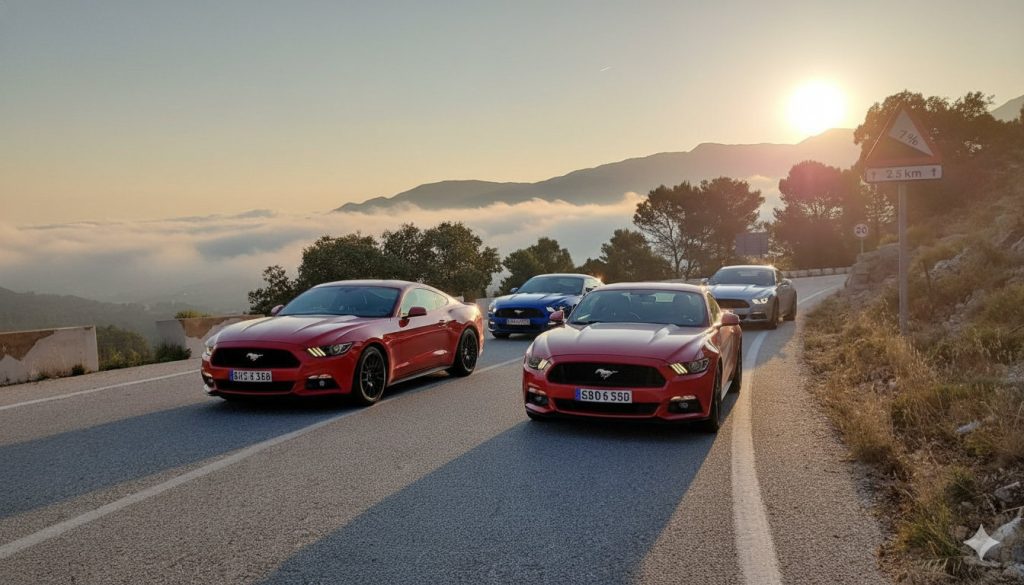
Route: Denia → Parcent → Coll de Rates → Tàrbena → Castell de Castells → Denia
Distance: Approx. 85 km
Driving Time: 2 – 2.5 hours (pure driving time)
Difficulty: Moderate to Technical
Best Car: Ford Mustang (V8 highly recommended for the tunnel effect)
The Overview
This is not a commute; it is a pilgrimage. This circular route takes you from the sea level of Denia up to the most iconic mountain pass in the Alicante province: the Coll de Rates.
While cyclists love this road for the pain, we love it for the pleasure. The ascent offers wide, sweeping curves perfect for getting into a rhythm, while the “back side” through Castell de Castells offers a technical, canyon-carving experience that feels like it was designed for a spirited Sunday drive.
Leg 1: The Warm Up (Denia to Parcent)
Directions: Leave Denia via the CV-724 (La Xara) and pick up the CV-720 towards Pedreguer. Follow signs for Alcalalí and Parcent.
The Drive: Use this section to get fluids up to temp. The road is relatively flat with gentle curves through the almond and orange groves of the Jalón Valley.
Mustang Tip: Keep the exhaust in “Normal” mode here; save the noise for the mountain.
Leg 2: The Ascent (Parcent to Coll de Rates)
Directions: In Parcent, take the CV-715. This is where the fun begins.
The Drive: The climb is approximately 6.5km with an average gradient of 5%. The tarmac is generally excellent.
The Experience: As you climb, the road opens up with long, visibility-friendly straights followed by 180-degree hairpins. You will see the coast dropping away in your rearview mirror.
The Summit: At the top, pull into the Restaurante Coll de Rates. Even if you don’t eat, park the car against the stone wall for the mandatory “King of the Mountain” photo with the Mediterranean in the background.
Leg 3: The “Wild West” (Tàrbena to Castell de Castells)
Directions: Continue over the top on the CV-715 towards Tàrbena. Just before entering the village of Tàrbena, take the sharp right turn onto the CV-752 towards Castell de Castells.[3]
The Drive: This is the driver’s secret weapon. Most tourists go straight to Callosa; you are going into the wild. The CV-752 runs along the ridge of the mountain. It is narrower, technical, and absolutely stunning.
Warning: The road is wide enough for a Mustang, but treat blind corners with respect.
The Vibe: High altitude, rocky landscapes, and almost zero traffic. Roll the windows down—the sound of the engine bouncing off the rock face here is incredible.
Leg 4: The Canyon Run (Castell de Castells to Denia)
Directions: From Castell de Castells, join the CV-720 heading east back towards Benigembla and Murla.
The Drive: You descend into the valley floor. The road widens and flows beautifully through the villages of Benigembla, Murla, and Orba.
The Home Stretch: From Orba, follow signs for Benidoleig (CV-731) or stick to the CV-715 to Ondara, bringing you back to the N-332 and Denia.
Pit Stop Recommendations
1. Lunch with a View: Restaurante Coll de Rates (The Summit)
Vibe: German/Spanish fusion.
Eat This: Their Apple Strudel is legendary, but for lunch, the Jägerschnitzel sits well after a drive.
Parking: Dedicated lot, but it gets busy with cyclists on weekends. Arrive by 12:30 PM.
2. The Petrolhead’s Choice: Venta La Montaña (Benimantell/Guadalest detour)
Note: This requires a slight detour if you choose to go down towards Callosa instead of Castell de Castells.
Vibe: Rustic, heavy, traditional food.
Eat This: “Olleta de Blat” (local stew) or rabbit chops.
3. Coffee Stop: Ca’s Pelut (Tàrbena)
Vibe: A biker and driver favorite. Authentic, slightly chaotic, very friendly.
Best for: A quick espresso and a chat with other petrolheads before tackling the CV-752.
The Serrella Spine Run
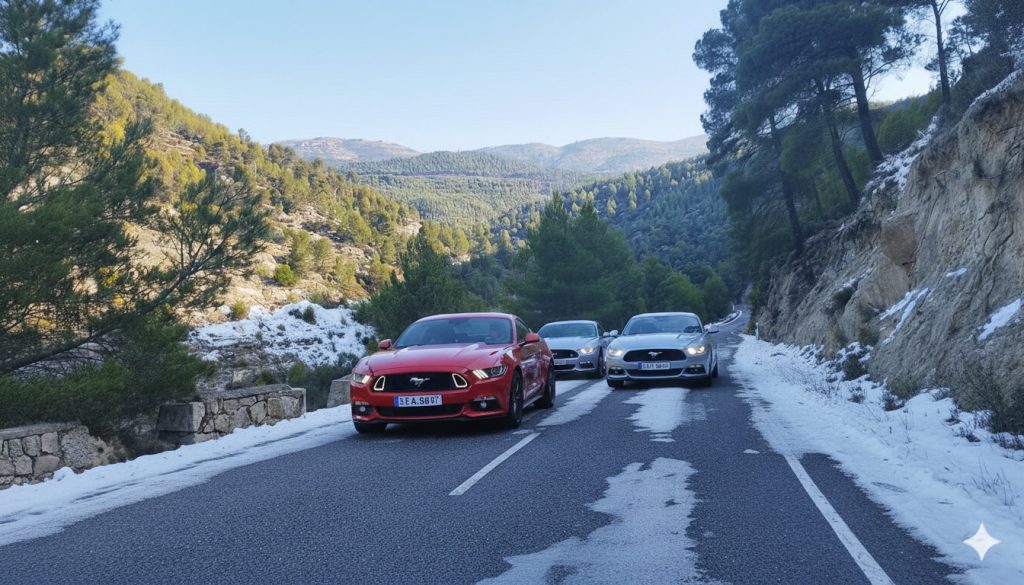
This route is the ultimate driving experience for a Mustang club. It takes you through the “hidden” Alicante, specifically the rugged northern face of the Sierra de Serrella and the Sierra de Aitana. This is a route of high-altitude passes, almond groves, and deep limestone canyons.
Route: Denia → Parcent → Benichembla → Castell de Castells → Facheca → Venta l’Esclavo → Quatretondeta → Cocentaina → Alcoy → Banyeres → Benilloba
Total Driving Time: 3 to 3.5 hours (active driving)
Terrain: Winding mountain passes, technical hairpins, and scenic valley straights.
Vibe: Rugged, remote, and absolutely breathtaking.
Leg 1: Denia to the “Gateway of the Valleys” (Parcent & Benichembla)
Directions: Exit Denia via the CV-725, then take the CV-731 towards Parcent. Once in Parcent, join the CV-720, which will be your primary road for most of the journey.
Pit Stop (Breakfast/Coffee): Cooperativa de Parcent. It is a great spot for a large group of Mustangs to park. They serve traditional “tostadas” and local coffee in a rustic, authentic environment.
Leg 2: Into the Wild (Castell de Castells to Facheca)
Directions: Continue on the CV-720 through Benichembla and up the winding pass to Castell de Castells. This stretch is one of the most scenic in the province. Follow signs for Famorca and Facheca.
Pit Stop (The View): Stop on the roadside between Famorca and Facheca. The limestone walls of the Serrella mountains loom directly over the road—it’s the perfect spot for a “convoy shot.”
Pit Stop (Drink/Tapa): Venta l’Esclavo (Facheca). A classic “roadside venta” that is very popular with motoring clubs. It has a large terrace and plenty of space for cars.
Leg 3: The Highland Loop (Quatretondeta to Cocentaina & Alcoy)
Directions: Stay on the CV-720 through Quatretondeta until you reach Gorga. From Gorga, follow signs for Cocentaina via the CV-706. After visiting Cocentaina, take the N-340 for a short hop into the industrial-historic city of Alcoy.
Pit Stop (Lunch – The Big Stop):
Venta el Borrego (Near Alcoy/Banyeres): This is the legendary pit stop for car enthusiasts in the region. Huge parking, traditional mountain food (try the Olleta Alcoiana), and a very friendly atmosphere for Mustang owners.
Leg 4: The Serrella South (Benilloba back to Gorga)
Directions: Exit Alcoy on the CV-70 heading towards Benilloba. After passing Benilloba, take the CV-710 which loops you back up to Gorga.
Pit Stop (Quick Respite): Restaurante L’Era (Benilloba). A great spot for a quick afternoon refreshment before the final leg back to the coast.
Leg 5: The Return to the Coast
Directions: From Gorga, simply retrace your steps back along the CV-720 through Castell de Castells and Parcent. Alternatively, for a change of scenery, head north from Gorga towards Pego via the CV-700 for a high-speed descent back to the Denia area.
Pro-Tips for the Pack
Fuel: There are almost no petrol stations in the small villages of Famorca or Facheca. Fill up in Denia or Parcent before heading deep into the mountains.
Photography: The road between Castell de Castells and Famorca is narrow but features “overhanging” rocks that make for incredible automotive photography.
Road Manners: The CV-720 is a favorite for local cyclists. When driving in a Mustang pack, keep a safe distance and pass with care to maintain the club’s good reputation in the local villages!
The Bandolero Route
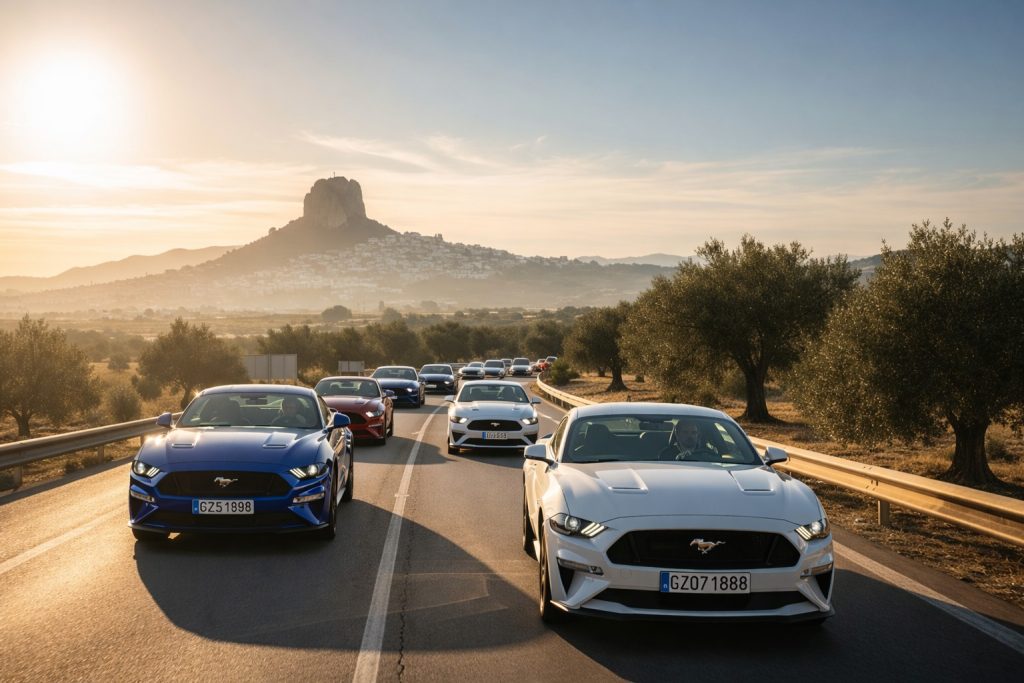
This spectacular loop cuts through the heart of Marina Baixa and the Guadalest Valley, combining coastal views, bandit history, and rugged mountain terrain.
- Route: Calpe → Altea la Vella → Callosa d’en Sarrià and Polop → Benimantell and Benifato → Guadalest → Alfaz del Pi → Calpe
- Driving time: 2.5 hours (not including stops)
- Terrain: National road (N-332) and winding mountain roads (CV-755, CV-70)
- Atmosphere: Panoramic views, traditional mountain cuisine, and ideal stops for photo sessions.
Stage 1: From Calpe to Altea la Vella (Coastal Warm-up)
Directions: Leave Calpe via the N-332 heading south toward Altea. After passing through the Mascarat tunnels, take the exit toward Altea la Vella.
Photo stop: Before reaching the village, enter the Russian Orthodox Church. Its architecture is impressive and provides a spectacular backdrop for the Mustangs.
Stop (Drink): In the centre of Altea la Vella. The bar Ca Joan is iconic, although any terrace in the village square is perfect for a quick coffee with nearby parking.
Stage 2: From Altea la Vella to Callosa d’en Sarrià and Polop (The Climb)
Directions: Follow the CV-755 inland. The road passes through citrus groves. Follow the signs toward Callosa d’en Sarrià and then connect with the CV-715 toward Polop.
Stop (History): In Polop, visit the Plaza de los Chorros, famous for its 221 water spouts.
Stop (Views): Head up toward the castle area to Bar El Castell. It is perched on a cliff and offers one of the best panoramic views of the valley with the Mediterranean in the background.
Stage 3: From Polop to Benimantell and Benifato (The Heart of the Valley)
Directions: Take the CV-70 toward Guadalest/Alcoy. This is the “Road of Heroes”: wide, well surfaced, and full of fast curves ideal for a V8. Pass the turn-off for Guadalest and continue on to Benimantell.
Stop (Food): Venta la Montaña (Benimantell): A legendary spot since 1910. Recommendation: Olleta de Blat or their grilled meats. Very welcoming atmosphere for drivers.
Stop (Food): Restaurante L’Era (Benifato): Just 2 minutes away. Incredible wood-fired rice dishes and a very authentic, relaxed atmosphere.
Hidden gem: In Benifato, look for La Esquinita. A small venue with a terrace offering “hawk’s-eye” views over the Guadalest reservoir.
Stage 4: The Return (The Descent)
Option A (Fast): Descend via the CV-70 toward La Nucía/Benidorm and take the AP-7 or the N-332 back to Calpe.
Option B (Scenic): From Benimantell, head toward Guadalest and take the road toward Castell de Castells (CV-752) if you want another hour of intense mountain driving, finally returning via Jalón.
Tips for the Pack:
Parking: In Polop space is limited; use the public car park at the entrance to the old town. In Benimantell there is usually easy parking near the restaurants.
Timing: Leaving Calpe at 10:30 AM allows you to be in Polop for an aperitif and in Benimantell by 2:00 PM for lunch.
Fuel: Fill up in Calpe or at the petrol station in Altea la Vella. Petrol stations are scarce once you head into the Guadalest Valley.
Suggestion: Don’t forget the group photo at the Mirador de la Bahía on the way back for the club’s Instagram.